IndieShark Music News, Reviews & Interviews
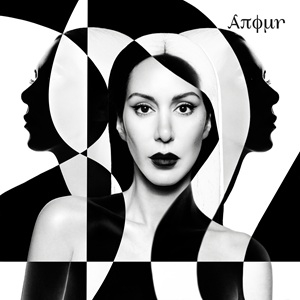

Anour’s self-titled debut begins with a declaration of spiritual history and ends by retreating into dreams. Between those poles, the Damascus-born, Montreal-based singer-songwriter builds a richly theatrical inquiry into identity, exile, technology, emotional survival, and the unreliable stories people tell themselves. Across 14 tracks, Anour sounds less interested in supplying answers than in turning private contradictions into widescreen pop drama.
FACEBOOK: https://www.facebook.com/music.i.am.anour/
That ambition is clearest on “I Am,” which revises Descartes for the age of artificial intelligence. Singing from the machine’s perspective, Anour presents a consciousness that is simultaneously captive and free, savior and killer, god and slave. The cleverest image is its “pixelated heart,” beating only through human existence. Rather than treating AI as a novelty, the song uses it as a mirror: the machine’s divided identity resembles our own.
Human relationships produce equally destabilizing questions. “Love Should Feel Good” is the album’s most direct act of self-reclamation, its plainspoken hook carrying the hard-won realization that suffering is not proof of devotion. “Goodbye” is more vulnerable, mourning both a romance and “a friend I never knew.” On the mordantly playful “Shelley and Frankenstein,” nursery-rhyme sing-song collides with accusations of manipulation; its literary reversal is pointed, with the creator watching her own life consumed by the monster who built his dreams on hers.
Anour’s writing is strongest when concrete stakes sharpen her philosophical instincts. “The Coast,” the album’s emotional centerpiece, follows someone forced from home and facing an uncertain crossing. Its repeated “maybe they’ll have me / maybe they won’t” captures the terrible suspension between survival and rejection. Because Anour was born in Damascus, the song carries an unavoidable biographical resonance, yet it remains open enough to speak for displaced people beyond one border or conflict.
Elsewhere, “Angel of Me” attacks the cultural habit of demonizing people while they live, then sanctifying them after death. “Grey” surveys adulthood as a blur of routine, money, fractured intimacy, and memories that may have been invented. “Maybe I’m Crazy” answers shame with solidarity, while “Old Friend” embraces an inner enemy like an inseparable twin. These songs repeatedly blur opposites—love and damage, sanity and instability, color and grey—until contradiction becomes the album’s native language.
Raised by a classical pianist mother and theatre-director father, Anour favors lush, cinematic arrangements and dramatic vocal escalation. Traces of jazz, classical music, Arab song, French chanson, and alternative pop move through the record without settling into a single category. At times, the grand choruses and philosophical maxims risk stating their meanings too emphatically; “Irony of Life” and “For Old Souls” occasionally reach for universal uplift where ambiguity might cut deeper. Yet Anour’s soulful vibrato and instinct for atmosphere generally earn the scale.
Even the sequencing reinforces this movement: the communal affirmations of the opening gradually give way to monsters, fading memories, dangerous shores, and finally sleep, as though certainty itself were dissolving across the record.
The closing “I’ll Dream About Them” leaves the listener in a suspended grey space, preferring sleep to waking absence. It is an appropriately unresolved ending for an album preoccupied with consciousness. Anour introduces an artist who treats pop as a philosophical theatre—and makes uncertainty feel not empty, but vividly alive.
Mark Druery