IndieShark Music News, Reviews & Interviews
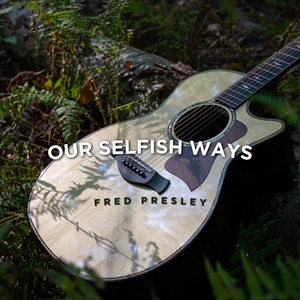

Fred Presley is emerging as a formidable presence in the folk, country, and bluegrass-adjacent music scenes. It’s exciting to see an artist rise who doesn’t feel referential, firmly carves their own path courtesy of sheer merit, and produces music that balances the contemporary liking of entertainment value and quality being concurrent in song. His latest single, simply titled My Greatest Disaster, is no exception.
INSTAGRAM: https://www.instagram.com/fredpresleymusic/
Like any tried and true country piece, My Greatest Disaster offers raw, stripped lyrics, juxtaposed by a soulful, upbeat medley and Presley’s crooning, if ever so slightly caustic vocals. Illustrate Magazine describes Mr. Presley as “…a modern protest voice with an old soul, stepping out from Wethersfield with an acoustic guitar, a weary conscience…in tow. Teaming up with longtime collaborator Eric Lichter at Dirt Floor Recording Studios in Middletown, CT, Presley channels the spirit of ’60s and ’70s folk firebrands, like Dylan, Cat Stevens, and Joan Baez, into a 2025 reality where climate collapse and political cowardice come as headlines.”
The single is a featured track on Mr. Presley’s new album, aptly titled in aforementioned vein Our Selfish Ways. Each of the tracks possess not only the previously mentioned quality, but also this consistent sense of congruence and reverence for the genres Presley dabbles in. What makes My Greatest Disaster a true country track is as much its unabashed vulnerability not at expense of Presley’s dominance, as it is this inherent self-awareness and modernity in lyrics. Presley looks back at a relationship in ruins, simultaneously mournful and full of gratitude at its very existence. There’s something almost Taoist about the nature of the song, the way it speaks so authentically to, and memorializes what makes a truly great relationship – whether or not fundamentally endurant. Much in the spirit of his politically aware presence, My Greatest Disaster is also a fitting track in the face of the current social and political climate. It can be featured as much literally as analogously, and that doesn’t just indicate a great piece of country music. It’s indicative of a genuinely great song.
As a music fan, I can’t help but be taken aback by some of what Mr. Presley sings about because of that kind of transparency. On the other hand, it reminds me of something I’ve been hungry as a listener to hear for some time. Simply put, authenticity, earnestness, and a genuine human desire to entertain. Apricot Magazine describes Mr. Presley’s musical presence as being “Built around acoustic guitar and a direct, expressive vocal performance…”, drawing “…deeply from the tradition of protest and conscience driven folk music. Presley channels the spirit of artists who believed songs could question power, challenge apathy, and inspire collective responsibility.
Rather than borrowing surface aesthetics, he embraces that tradition at its core, using simplicity as strength and honesty as his primary instrument…Musically, the influence of classic folk icons is clear, but…(he) does not feel like a throwback. (He) feels current because the problems…addresse(d) remain unresolved. Presley uses familiar folk language to speak to a modern moment, bridging generations through shared concern and shared responsibility.”
Mark Druery